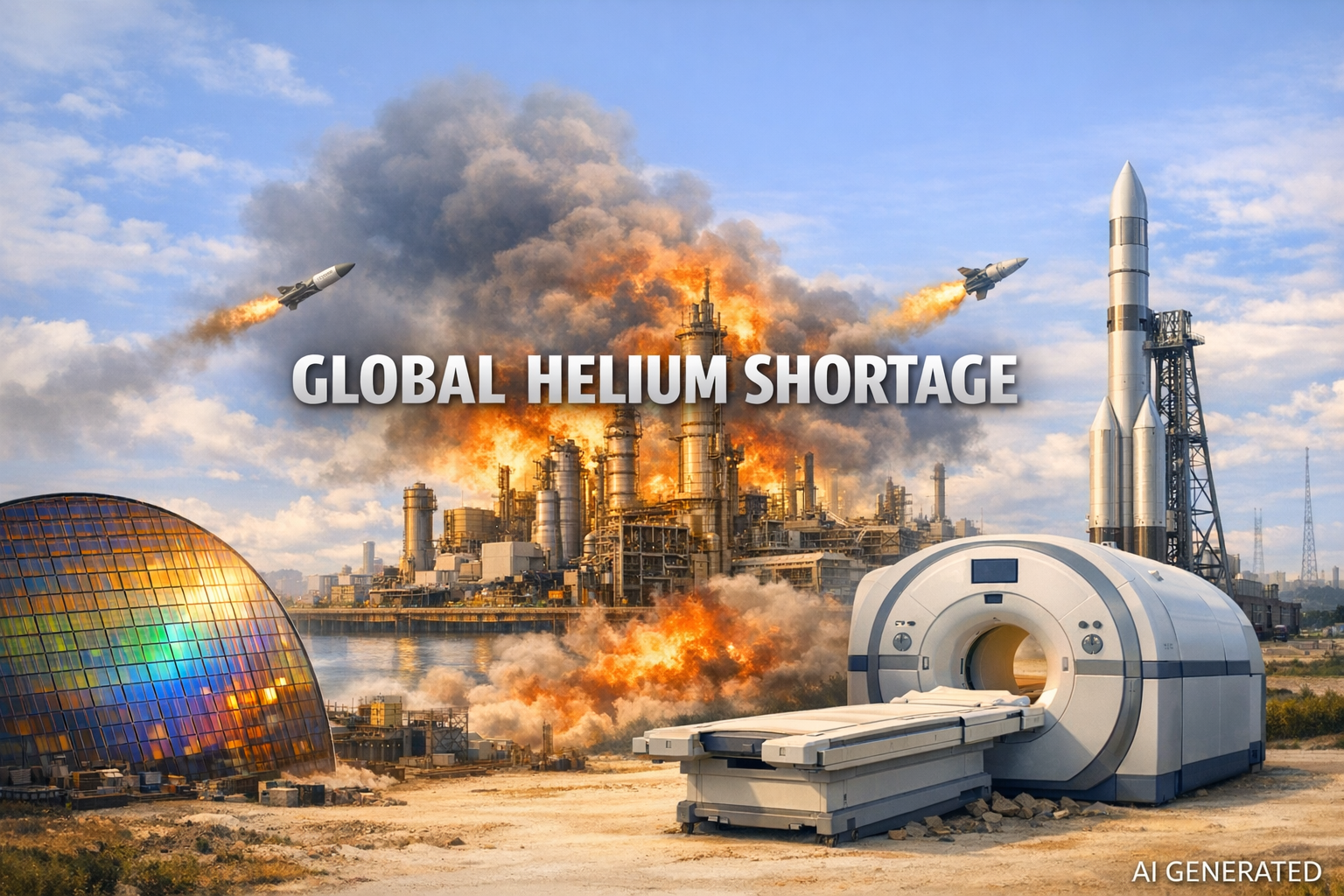
Global helium supplies have tightened sharply due to the Middle East conflict, with Qatar’s Ras Laffan hub disrupted. Industry executives warn that shortages are already impacting semiconductor production, medical imaging, and aerospace systems, while prices have surged since early March 2026.
Source: Read on Reuters
Key Facts
Date: March 27, 2026
Cause: Middle East conflict disrupting helium output from Qatar, which produces nearly one‑third of global supply.
Impact: Semiconductor chipmakers, electronics manufacturers, and medical imaging providers are reporting supply disruptions.
Price Surge: Spot helium prices have doubled since the crisis began.
Industry Implications
Semiconductors: Helium is essential for cooling, leak detection, and precision manufacturing. Shortages risk slowing chip production, affecting smartphones, automobiles, and AI hardware.
Healthcare: MRI machines rely on helium for superconducting magnets. Hospitals are bracing for potential downtime and exploring helium‑free alternatives.
Aerospace & Research: Helium is critical for rocket testing, cryogenics, and scientific instruments. Delays in projects are expected.
Global Diversification: New helium exploration projects in Africa and the U.S. are being accelerated to reduce reliance on Middle East supply.
Editorial Conclusion
The helium shortage underscores how fragile global supply chains are when concentrated in conflict‑prone regions. For industries from semiconductors to healthcare, resilience now depends on diversifying sources and investing in helium‑free technologies. India, scaling up semiconductor production, faces particular risk unless alternative supply routes are secured.
⚖️ Legal Disclaimer
This article is an independent editorial summary based on publicly available reporting from Reuters. It is intended for commentary, analysis, and educational discussion. All trademarks and rights remain with their respective owners.
Image Credit: MemoryErasure (Conceptual Illustration)