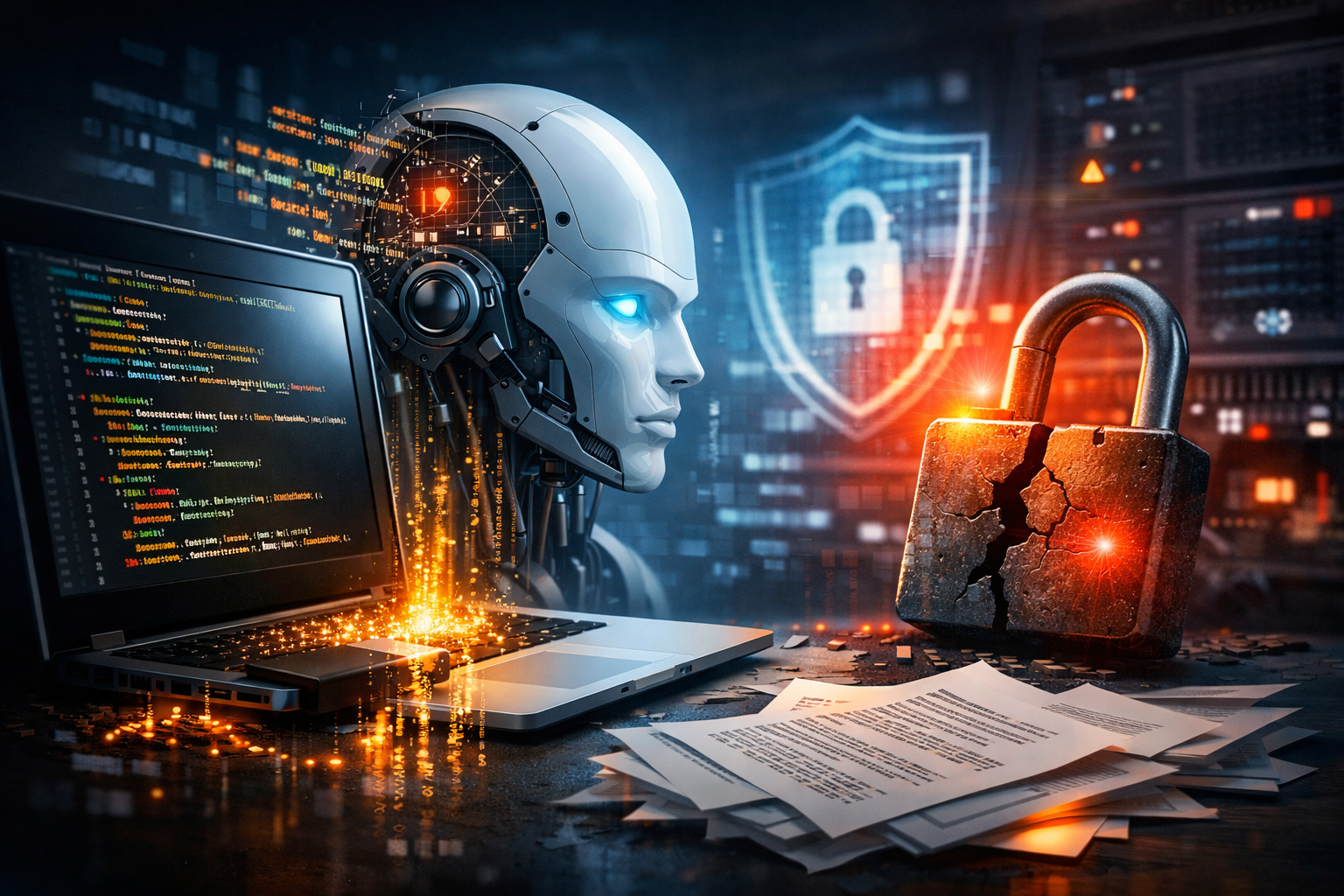
On March 2026, reports surfaced that internal code details from Anthropic’s Claude AI had been leaked online. While the company quickly moved to contain the fallout, the incident has sparked a wider debate about how much secrecy is acceptable in AI development and whether the industry is prepared for the risks that come with building systems of unprecedented scale and influence.
Anthropic, founded in 2021 by former OpenAI researchers, has positioned itself as a leader in “constitutional AI” — systems guided by explicit ethical rules. Claude, its flagship model, has been marketed as safer, more aligned, and more transparent than competitors. Yet the leak of internal code details undermines that narrative, forcing both the company and the industry to confront uncomfortable truths.
What Happened
The leak reportedly involved snippets of internal code and documentation related to Claude’s architecture and training processes. While no customer data or proprietary datasets were exposed, the incident revealed sensitive design choices that Anthropic had kept under wraps.
Security analysts note that even partial code leaks can be damaging. They provide competitors with insights into proprietary methods and expose potential vulnerabilities that malicious actors could exploit. For a company whose brand is built on safety, the optics are particularly damaging.
Why It Matters
Transparency vs. Secrecy
AI companies often argue that secrecy is necessary to prevent misuse.
Critics counter that secrecy erodes trust, especially when systems are deployed at scale in sensitive domains like healthcare, finance, and education.
The leak forces Anthropic to clarify where it draws the line between openness and protection.
Security Risks
Exposed code can reveal attack surfaces.
Even if the leak did not include deployment infrastructure, hackers may use the information to probe weaknesses.
This raises questions about whether AI labs are investing enough in cybersecurity relative to the billions spent on compute.
Competitive Landscape
Rivals like OpenAI, Google DeepMind, and Meta are watching closely.
Any insight into Claude’s architecture could inform their own strategies.
In a market where frontier models are tightly guarded, leaks shift competitive dynamics.
Industry Reactions
Anthropic’s Response: The company issued a statement emphasizing that no customer data was compromised and that systems remain secure. It framed the incident as a “limited exposure” rather than a breach.
Expert Commentary: Cybersecurity experts argue that the leak underscores the need for independent audits of AI systems. Without external oversight, companies may downplay risks.
Public Perception: For users and enterprises adopting Claude, the incident raises doubts. Trust in AI is fragile, and leaks can erode confidence quickly.
Broader Implications
The Anthropic leak is not just about one company. It reflects a broader tension in the AI industry: how to balance innovation, secrecy, and accountability.
Governance: Regulators in the EU and U.S. are already drafting rules requiring disclosure of AI system capabilities. Leaks accelerate calls for mandatory transparency.
Ethics: If AI companies claim to prioritize safety, they must demonstrate it not only in model outputs but also in their internal practices.
Infrastructure: As models scale, the attack surface grows. Data centers, training pipelines, and deployment APIs all become potential targets.
Lessons for the Industry
Invest in Cybersecurity: AI labs must treat security as core infrastructure, not an afterthought.
Independent Oversight: External audits can validate safety claims and reassure stakeholders.
Controlled Transparency: Companies should proactively share technical details that build trust, while safeguarding against misuse.
Crisis Communication: How a company responds to leaks matters as much as the leak itself. Clear, honest communication can mitigate reputational damage.
Editorial Perspective
The Anthropic leak is a reminder that trust in AI is earned, not assumed. Companies cannot simply market safety; they must prove it through resilient systems, transparent practices, and ethical governance.
In the long run, leaks may push the industry toward greater openness. Just as open‑source software became a foundation for trust in IT, controlled transparency in AI could become a competitive advantage. Anthropic, ironically, may emerge stronger if it embraces this moment as an opportunity to lead on accountability.
Conclusion
The exposure of Claude AI’s internal code details is not catastrophic, but it is consequential. It highlights vulnerabilities in the way AI companies manage secrecy, security, and trust. For Anthropic, the challenge is clear: rebuild confidence by demonstrating that safety is more than a slogan. For the industry, the lesson is broader: infrastructure without trust is infrastructure at risk.
Sources
Wired – Anthropic Leak Raises Questions About AI Secrecy (March 2026)
Bloomberg – Claude AI Code Exposure Sparks Industry Debate (March 2026)
TechCrunch – AI Security and Transparency in Focus After Anthropic Incident (March 2026)
Legal Disclaimer
This article is an independent editorial summary based on publicly available reporting from Wired, Bloomberg, and TechCrunch. It is intended for commentary, analysis, and educational discussion. All trademarks and rights remain with their respective owners.
Image credit: AI assisted illustration