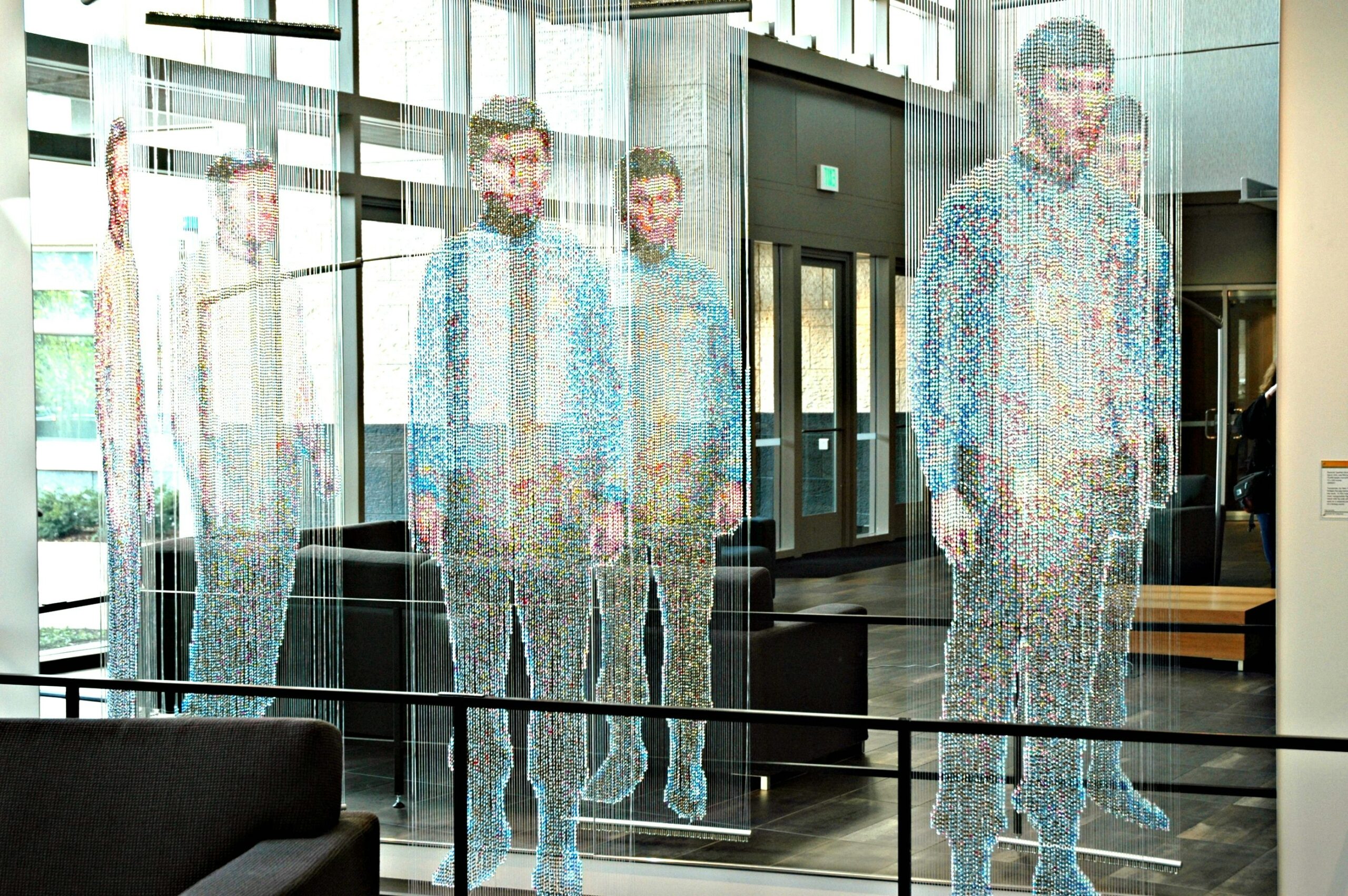
For decades, the promise of automation was tempered by a safeguard: the human‑in‑the‑loop. Whether in aviation, medicine, finance, or defense, humans were meant to remain the final arbiters of machine decisions. Oversight was the anchor, the guarantee that autonomy would not drift into error or harm. Yet in 2026, this anchor is slipping. The human‑in‑the‑loop is disappearing faster than we imagined, not because of neglect, but because of acceleration.
The Vanishing Anchor
Recent deployments of large language models, autonomous vehicles, and robotic systems reveal a striking trend: human intervention is increasingly optional rather than mandatory. AI copilots in enterprise software generate decisions without requiring human approval. Autonomous drones execute missions with minimal oversight. Financial trading algorithms operate at speeds where human review is impossible. In each case, the loop is not broken — it is bypassed.
The rationale is efficiency. Humans slow systems down. In logistics, milliseconds matter. In healthcare diagnostics, delays can cost lives. In defense, reaction times define survival. The logic is compelling: remove the human bottleneck. But efficiency is not the same as wisdom.
Research Signals from 2025–2026
Recent studies in AI safety highlight how human‑in‑the‑loop mechanisms are being eroded by scale. Large language models integrated into corporate workflows now generate contracts, code, and recommendations at volumes no human team can realistically audit. In autonomous driving, Tesla, Waymo, and others report that human intervention rates are dropping sharply — not because humans are more capable, but because systems are designed to minimize their role.
Meanwhile, robotics research shows that “supervised autonomy” is giving way to “delegated autonomy.” Once, robots asked for confirmation before acting. Now, they act and report afterward. The loop has shifted from proactive oversight to retrospective review — a subtle but profound change.
Why the Loop Matters
Human‑in‑the‑loop is not simply about catching errors. It is about embedding accountability, context, and ethical judgment into systems. Machines can optimize, but they cannot interpret meaning. They can calculate probabilities, but they cannot weigh values.
When oversight disappears, so does accountability. Who is responsible when an AI system misdiagnoses a patient? Who bears liability when an autonomous drone misidentifies a target? Without humans in the loop, responsibility becomes diffuse, and systems drift into moral ambiguity.
The Pressure of Scale
The disappearance of the loop is not malicious; it is structural. Systems now operate at scales where human review is impractical. A single AI model can generate millions of outputs per day. A trading algorithm can execute thousands of transactions per second. A robotic swarm can coordinate actions faster than human cognition allows.
The loop collapses under the weight of scale. Humans cannot keep pace, and so oversight becomes ceremonial — present in principle, absent in practice.
Blind Spots Emerging
As oversight fades, blind spots grow. AI hallucinations produce false but confident outputs. Autonomous vehicles misinterpret edge cases. Robotic systems encounter environments too complex to model. These blind spots are not anomalies; they are structural features of autonomy without oversight.
The danger is not that machines fail, but that they fail invisibly. Without humans in the loop, errors propagate silently, embedded in systems that appear seamless but conceal fragility.
Governance and Ethics
Governance frameworks still assume human‑in‑the‑loop oversight. Regulations for medical AI, autonomous weapons, and financial automation often stipulate human review. Yet in practice, these reviews are vanishing. The gap between policy and reality widens.
Ethics, too, lags behind. Philosophical debates about responsibility presuppose human decision‑makers. But when systems act autonomously, responsibility becomes distributed across designers, deployers, and users. The disappearance of the loop forces us to rethink accountability in a world where machines act without pause.
What Comes Next
The challenge is not to restore the loop in its old form. Humans cannot realistically oversee every decision in systems operating at planetary scale. The challenge is to reimagine oversight.
Interpretability: Systems must explain their reasoning, allowing humans to audit meaning rather than every output.
Constraints: Governance must embed ethical boundaries directly into systems, not rely on external review.
Selective Oversight: Humans should intervene at critical junctures, not in every transaction.
Forgetting: Systems must learn to discard harmful patterns, allowing oversight to focus on renewal rather than endless accumulation.
Human‑in‑the‑loop is disappearing, but oversight need not vanish. It must evolve. The future of autonomy will be defined not by whether humans remain in the loop, but by whether wisdom remains embedded in systems that no longer wait for us.
Closing Reflection
The disappearance of human‑in‑the‑loop is not a failure of design; it is a symptom of acceleration. As autonomy expands, oversight must transform. The question is not whether machines can act without us — they already do. The question is whether we can embed meaning, accountability, and humility into systems that no longer pause for human approval.
Progress without oversight is fragility disguised as strength. The loop may be vanishing, but the responsibility to guide autonomy remains ours.
Image credit: Unsplash